Eight legs, infinite patience, and an engineering ability that genuinely humbles architects — these 70 free spider coloring pages make a compelling case for arachnids.
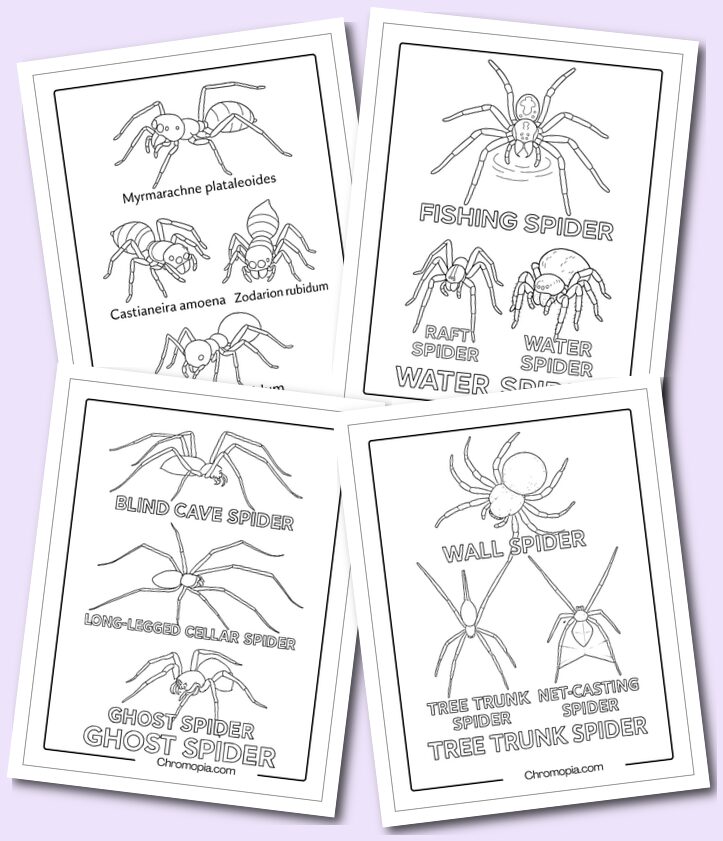
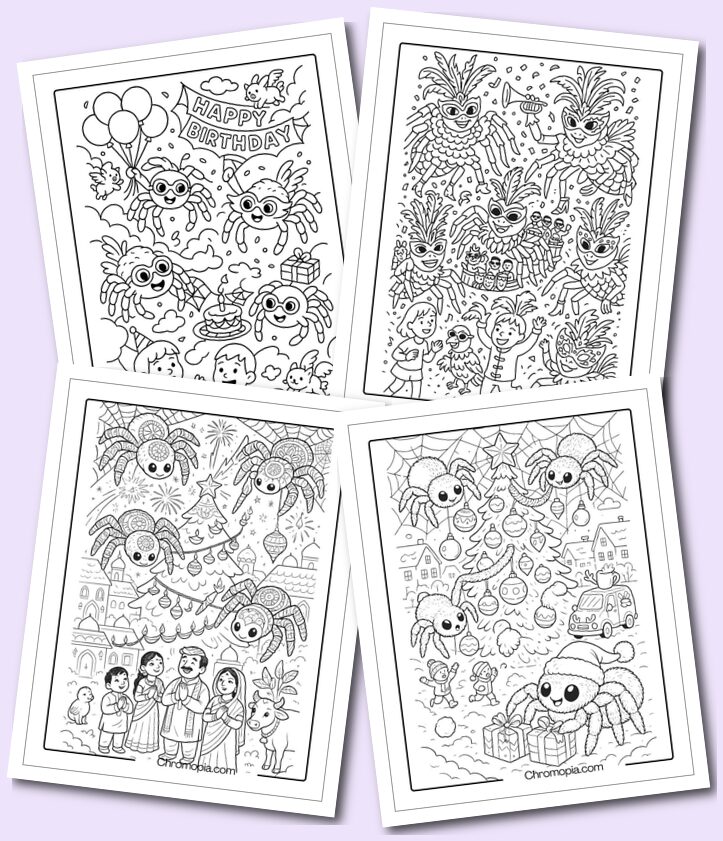
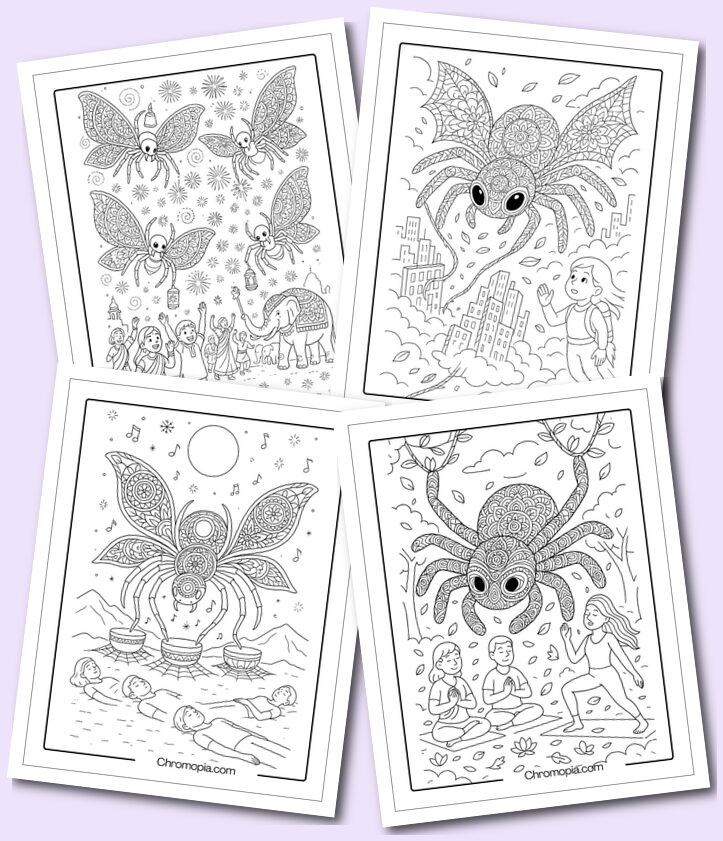
Educational black widow and tarantula species illustrations for kids who prefer their nature knowledge accurate, Halloween cartoon spiders for seasonal crafting, adorable friendly spider characters for little ones who haven’t learned to be afraid yet, and hypnotic web mandala patterns for adults who discover surprisingly quickly that spiders are extraordinary coloring subjects. Free, printable, unexpectedly beautiful.
Want even more Halloween creativity? Discover our full 3600+ Halloween coloring pages collection featuring more than 40 unique topics
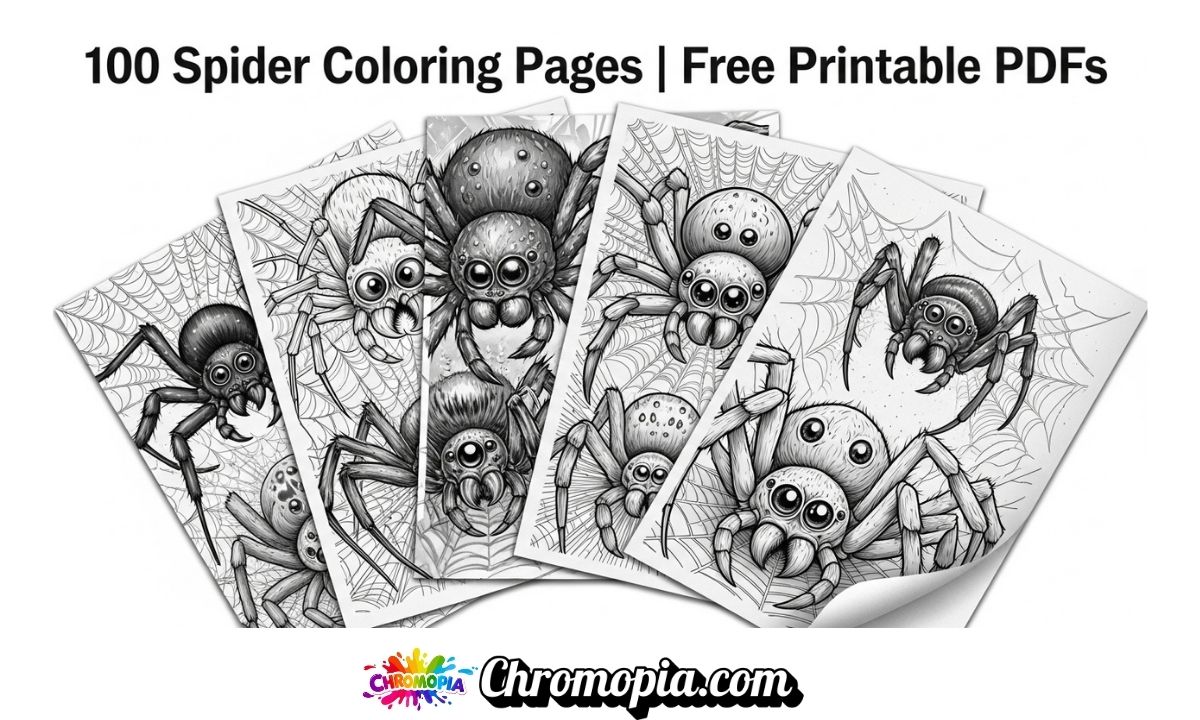
Quick Navigation – Find Your Perfect Spider Fast!
👶 For Little Kids (Ages 3-6): Cute Cartoon Spiders, Simple Halloween Spiders
🧒 For Big Kids (Ages 7-12): Spider Species, Fantasy Spiders, Holiday Celebrations
👦 For Teens (Ages 13-17): Realistic Species, Complex Halloween Scenes, Encyclopedia Pages
👨 For Adults: Mandala Spiders, Detailed Species Studies, Therapeutic Designs
🎓 For Students: Educational Encyclopedia Pages, Species Identification Charts
🎃 Seasonal: Halloween Spiders, Holiday Celebration Spiders
🧘 Therapeutic: Mandala Spider Designs, Mindful Web Patterns
🔬 Educational: Real Species, Anatomy Studies, Habitat Scenes
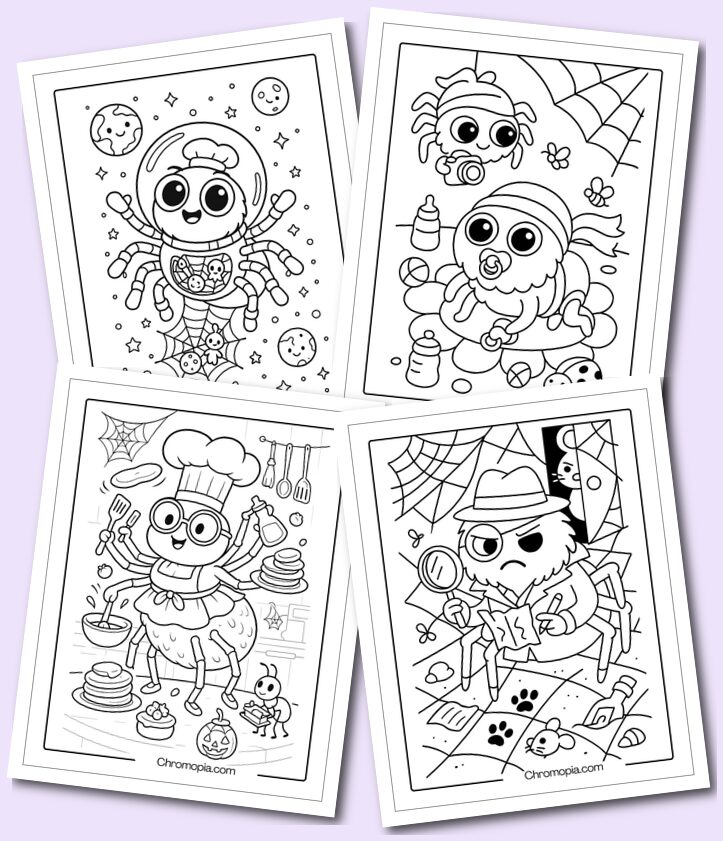
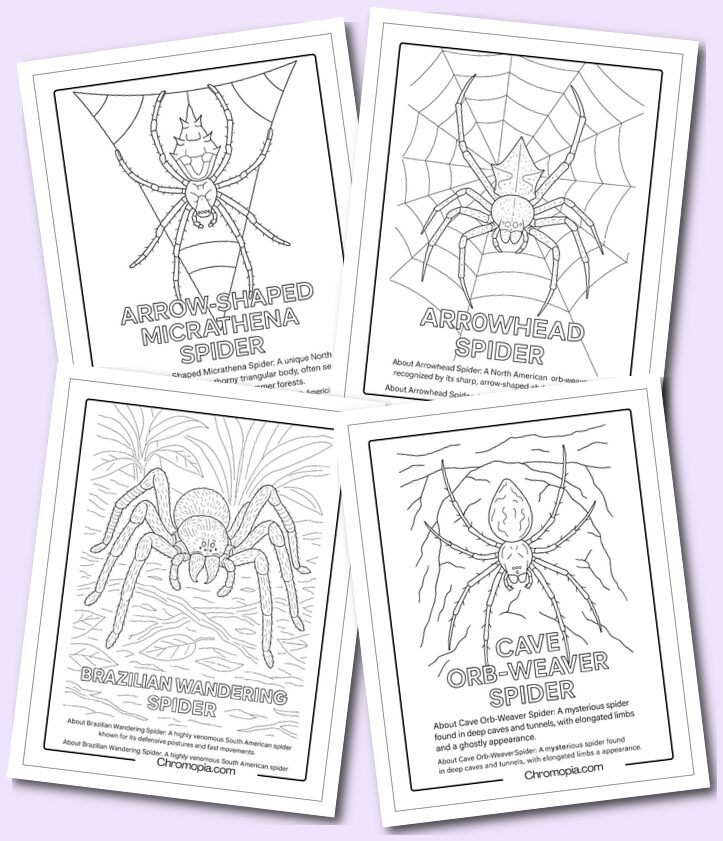
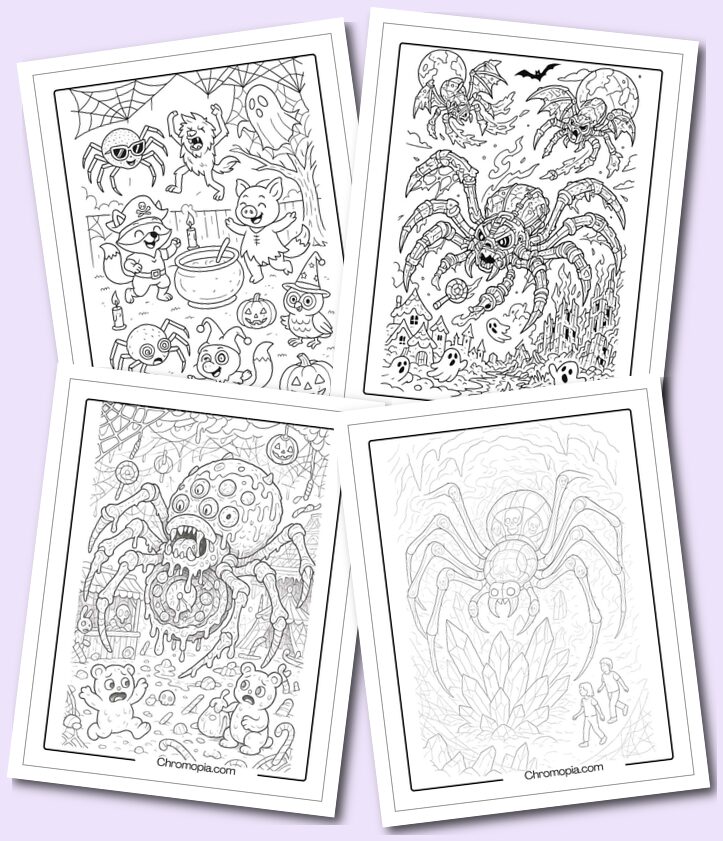
Want more creepy crawlies? Check out our Zombie Coloring Pages, bat coloring pages, graveyard coloring pages, and haunted house coloring pages.
15 Creative Projects Using Your Colored Spider Pages
Spin your spider art into amazing creations beyond basic coloring!
Educational & Science Projects
1. Create a Spider Field Guide
Bind your colored species pages into a personal spider identification book. Add notes about habitats, behaviors, and interesting facts!
2. Build a Spider Habitat Diorama
Use a shoebox to create realistic spider environments. Add your colored spiders with cotton ball webs and natural materials.
3. Design a Spider Life Cycle Display
Arrange your encyclopedia pages to show complete spider development from egg to adult. Perfect for science fair projects!
4. Make Spider Anatomy Models
Use your colored anatomy pages as templates to build 3D spider models with clay, pipe cleaners, and craft materials.
5. Create Educational Posters
Enlarge and mount your species pages to make classroom displays about spider diversity and importance in ecosystems.
Halloween & Seasonal Decorations
6. Halloween House Transformation
Cut out colored Halloween spiders and create spooky window displays, door decorations, or haunted yard scenes.
7. Giant Halloween Web Installation
Use yarn or rope to create massive webs in corners, then add your colored spiders as the web masters!
8. Holiday Spider Ornaments
Laminate holiday-themed colored spiders and add strings to create unique seasonal tree ornaments and decorations.
9. Spooky Party Centerpieces
Mount colored spiders on sticks, add to flower arrangements, or create themed table displays for Halloween parties.
10. Seasonal Spider Garlands
String together small colored spiders to create festive garlands for mantels, doorways, or party decorations.
Therapeutic & Mindful Projects
11. Meditation Corner Artwork
Frame your mandala spider pages and create a calm, focused space for daily mindfulness and stress relief.
12. Anxiety Relief Portfolio
Keep completed therapeutic spider pages in a special binder – review during stressful moments for instant calm.
13. Gratitude Spider Journal
Write daily gratitudes around the edges of your colored mandala spiders – combine art therapy with positive thinking.
14. Mindful Gift Sets
Package colored spider mandalas with herbal tea, aromatherapy items, and encouraging notes for stressed friends.
15. Progressive Relaxation Art
Create a series showing simple to complex spider mandalas – use as visual guides for meditation progression.
Expert Organization for 100 Spider Coloring Pages
Master your arachnid art collection with smart organization strategies!
Strategic Download Approach
Start small, build your collection:
- Week 1: Download 5 pages matching your current interest (species, Halloween, cartoon, etc.)
- Week 2: Try 5 pages from a different category to explore variety
- Week 3: Add 5 educational pages for learning opportunities
- Week 4: Experiment with 5 therapeutic mandala designs
- Always bookmark this page for easy future access!
Educational Organization System
Teachers – categorize by subject:
- Science Class: Species pages, anatomy charts, life cycle diagrams
- Art Class: Mandala designs, creative fantasy spiders, cartoon characters
- Seasonal Learning: Holiday spiders tied to calendar studies
- Reading Comprehension: Use spider facts to develop vocabulary
- Math Integration: Count legs, eyes, web segments for number practice
Home Storage Solutions
Family organization tips:
- Active Coloring Box: Current favorites easily accessible
- Completed Gallery: Display finished masterpieces on walls or bulletin boards
- Seasonal Storage: Holiday-themed pages organized by calendar
- Educational Library: Species and encyclopedia pages for reference and learning
- Travel Pack: Portable selection for car trips and waiting rooms
Budget-Smart Printing Strategies for 100 Spider Pages
Print efficiently while maintaining quality and saving money!
Ink Conservation Techniques
Smart printer settings:
- Draft Mode: Perfect for practice pages and initial coloring attempts
- Grayscale Printing: Many spider designs look excellent in black and white
- Thin Line Setting: Reduces ink usage while maintaining clear outlines
- High Quality: Reserve only for final versions or gift presentations
Spider-Specific Settings:
- Web Details: Use “Fine” line settings to capture intricate web patterns
- Body Patterns: “Normal” quality shows spider markings clearly
- Background Elements: “Draft” mode sufficient for simple backgrounds
Paper Selection for Spider Success
Match paper to purpose:
- Regular Copy Paper (20lb): Perfect for crayons and basic colored pencils
- Medium Weight (24lb): Best for markers and blended colored pencil work
- Cardstock: Ideal for gift versions, display pieces, and projects
- Recycled Paper: Eco-friendly option that works great for practice pages
Special Considerations:
- Web Pattern Pages: Slightly textured paper can enhance web appearance
- Mandala Designs: Smooth paper allows for even color application
- Halloween Scenes: Darker paper can create dramatic effects
Bulk Printing Economics
Cost-saving strategies:
- Weekly Printing: Print 10-15 pages at once for efficiency
- Compatible Cartridges: Generic ink often costs 60% less than brand name
- Paper Bulk Purchases: Warehouse stores offer significant per-page savings
- School Supply Sales: Back-to-school seasons offer excellent paper deals
Spider Coloring Supply Guide by Age & Purpose
For Young Spider Fans (Ages 3-6)
Beginner-Friendly Kit:
- Jumbo Crayons: Perfect grip size for developing fine motor skills
- Washable Markers: Parent-approved for inevitable creativity messes
- Large Colored Pencils: Easier to control than thin pencils
- Fun Erasers: Spider-shaped erasers add thematic connection
Safety Priority: All materials should be non-toxic, age-appropriate, and free from small parts.
Encouragement Approach: Focus on effort and creativity rather than accuracy – “Your pink spider looks so happy!”
For Elementary Spider Scientists (Ages 7-12)
Learning-Focused Collection:
- 24-Count Crayon Set: Good color variety without overwhelming choices
- Beginner Colored Pencils: Better control for detailed spider features
- Washable Markers: Great for bold web patterns and backgrounds
- Pencil Case: Keep supplies organized and portable for school use
Educational Enhancement: Encourage consistent color coding for species identification – all jumping spiders in blue, all orb weavers in green, etc.
For Teen Spider Enthusiasts (Ages 13-18)
Advanced Artistic Tools:
- Professional Colored Pencils: Prismacolor or Faber-Castell for blending
- Fine-Tip Markers: Precision work on spider details and web patterns
- Gel Pens: Metallic and glitter options for special mandala effects
- Blending Tools: Stumps and tortillons for professional shading
Study Integration: Use colored pencils for species identification charts – helps with biology and zoology studies.
For Adult Spider Colorists
Therapeutic & Artistic Arsenal:
- High-Quality Pencils: Prismacolor Premier, Faber-Castell Polychromos
- Fine Liners: Add intricate details to web patterns and spider anatomy
- Watercolor Pencils: Advanced blending for artistic interpretation
- Specialty Pens: Metallic gel pens for highlighting mandala elements
- Professional Paper: Higher-weight paper for serious artistic work
Mindfulness Enhancement: Choose tools that feel comfortable and satisfying – texture, weight, and color quality matter for therapeutic benefits.
Master Spider Coloring Techniques
Realistic Spider Coloring Methods
Authentic Spider Colors:
- Brown Species: Various earth tones from light tan to dark chocolate
- Black Spiders: True black with subtle blue or brown undertones
- Colorful Species: Jumping spiders and peacock spiders showcase vibrant blues, greens, and reds
- Pattern Work: Stripes, spots, and leg bands require careful color placement
Advanced Realism Techniques:
- Hair Texture: Light stippling suggests spider fuzziness (tarantulas)
- Body Shading: Curved shading follows spider’s three-dimensional form
- Eye Reflection: Tiny white highlights make eyes appear alive
- Leg Segments: Alternate light and dark bands show natural jointing
Creative Fantasy Spider Methods
Artistic Freedom Approaches:
- Rainbow Spiders: Each leg in different bright colors
- Metallic Effects: Silver and gold for magical fantasy spiders
- Pattern Play: Geometric designs, polka dots, or stripe combinations
- Glow Effects: Bright centers fading to darker edges
Web Coloring Techniques:
- Traditional Webs: Light gray or off-white for natural appearance
- Magical Webs: Silver, gold, or iridescent colors for fantasy
- Dewdrop Effects: Small white highlights suggest morning moisture
- Gradient Webs: Color transitions from center to outside
Therapeutic Mandala Approaches
Mindful Coloring Methods:
- Center-Out Progression: Start at center, work gradually outward
- Color Breathing: Choose colors that match desired emotional state
- Pattern Repetition: Repeat color sequences for meditative rhythm
- Intention Setting: Assign positive meaning to each color choice
Stress-Relief Techniques:
- Slow, Steady Strokes: Consistent pressure and speed calm anxiety
- Color Harmony: Use analogous colors for peaceful, unified feeling
- Focus Practice: Concentrate entirely on current section being colored
- Progressive Relaxation: Start with simple areas, advance to complex details
Comprehensive Spider Coloring FAQ
Fear & Phobia Questions
Q: Will spider coloring pages make my child afraid of spiders?
A: When presented positively, spider coloring typically reduces fear! Start with cute cartoon spiders and educational content that shows spiders as helpful garden friends. Many children become fascinated rather than frightened.
Q: My child has arachnophobia – should they avoid these pages?
A: Actually, gradual exposure through coloring can help overcome fears! Start with very cartoon-like spiders, focus on educational benefits, and always stay positive. Many therapists use art therapy for phobia treatment.
Q: Are the realistic spider pages too scary for young kids?
A: Our species pages focus on scientific accuracy rather than scary imagery. However, sensitive children might prefer cartoon spiders initially. You know your child best!
Q: How can I make spider coloring a positive experience?
A: Emphasize spiders as amazing architects (web builders), helpful pest controllers, and fascinating creatures. Share cool spider facts while coloring together!
Educational Value Questions
Q: How accurate are the spider species illustrations?
A: Our species pages are based on scientific references and real spider anatomy. They’re excellent for educational purposes while remaining colorable and engaging.
Q: Can these pages help with science education?
A: Absolutely! Spider coloring reinforces learning about arachnid anatomy, life cycles, habitats, and ecological importance. Many teachers use them for biology units.
Q: What ages benefit most from spider coloring pages?
A: All ages gain different benefits – preschoolers develop motor skills and overcome fears, school-age children learn science concepts, teens practice detailed art techniques, and adults enjoy therapeutic relaxation.
Q: Are these suitable for homeschooling curricula?
A: Perfect for homeschool science studies! Use species pages for biology, mandala pages for art therapy, and Halloween pages for seasonal learning.
Technical & Printing Questions
Q: Why do spider legs sometimes print faintly?
A: Thin spider legs require good ink levels and “Normal” print quality. Try increasing contrast in printer settings or checking ink cartridge levels.
Q: Can I enlarge spider pages for better detail visibility?
A: Yes! Print at 125-150% for easier coloring of intricate details like spider eyes and web patterns. Adjust paper size accordingly.
Q: What’s the best paper for detailed spider coloring?
A: Medium-weight paper (24lb) works well for most techniques. Use cardstock for markers or watercolors, regular copy paper for crayons and pencils.
Q: Do these work well for group coloring activities?
A: Excellent for groups! Print multiple copies of the same spider for comparison, or have each person color different species for educational discussions.
Creative Use Questions
Q: Can I use spider coloring pages for Halloween decorations?
A: Perfect for Halloween! Color them, cut them out, and create spooky decorations. They’re much more artistic than store-bought plastic spiders.
Q: Are these suitable for senior adult coloring groups?
A: Our mandala spider pages are particularly popular with adult coloring groups. They offer relaxation benefits while maintaining engaging subject matter.
Q: How can I incorporate these into birthday parties?
A: Great for nature-themed or Halloween birthday parties! Set up coloring stations, create spider crafts, or use as party favor activities.
Q: Can colored spider pages be used for educational displays?
A: Absolutely! Mount completed species pages for science fair projects, classroom displays, or nature center educational exhibits.
Therapeutic Benefits Questions
Q: Do spider mandala pages really reduce stress?
A: Research shows that detailed coloring activates the same brain regions as meditation, reducing cortisol levels and promoting relaxation. The repetitive patterns are particularly effective.
Q: Can spider coloring help with focus and attention issues?
A: Many parents and teachers report improved focus when children color detailed patterns. The combination of fine motor work and concentration can be very beneficial.
Q: Are these appropriate for art therapy sessions?
A: Many art therapists use animal coloring, including spiders, to help clients explore fears, develop coping skills, and practice mindfulness techniques.
Q: How long should therapeutic coloring sessions last?
A: For stress relief, 20-30 minutes is optimal. Longer sessions (45+ minutes) work well for deep meditation and mindfulness practice.
💡 Spider Coloring Pro Tip: Start with a friendly cartoon spider to build confidence, then gradually explore more detailed species and complex mandala designs. Before you know it, you’ll be a master spider colorist with an amazing collection of arachnid art – and maybe a new appreciation for these incredible creatures!


